

Contrary to what biologists thought, climate change is already causing local extinctions in North America and Europe. In fact, animals and plants there are more vulnerable to global warming than species in tropical regions, according to a study published last week.
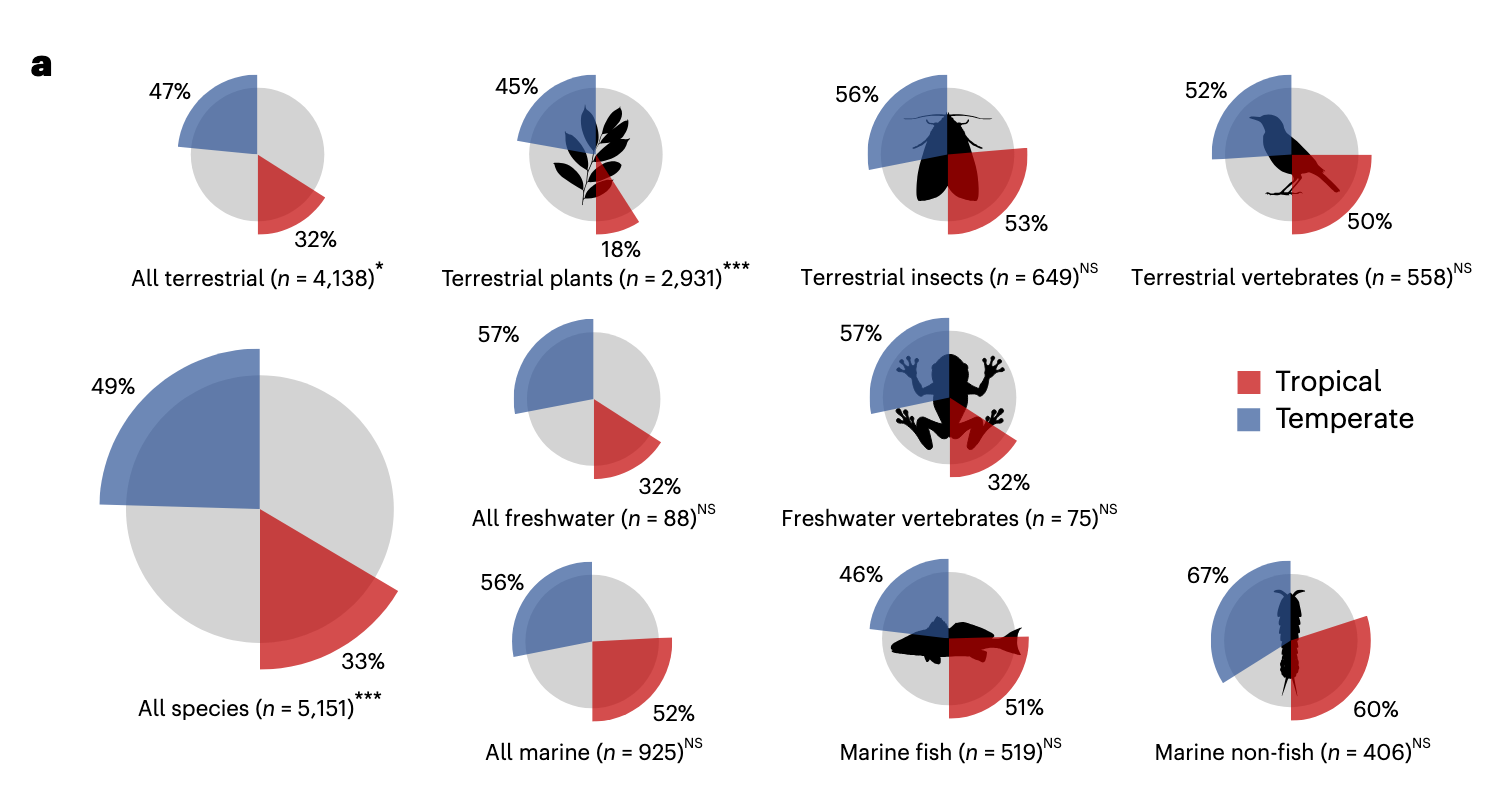
The researchers found that 49% of species in temperate areas have disappeared from parts of their range, compared to 33% in tropical regions. Nearly three-quarters of species in temperate areas are also not moving into cooler areas, endangering their long-term survival.
“This data actually tells us that climate change has already happened, and it has important consequences already on species,” Gopal Murali, the lead author of the study and former postdoctoral researcher at the University of Arizona, told me.
Have an extra two minutes? I’d greatly appreciate if you would answer a few questions to help me make Nature Signals better!

Digging through the data to track survival of species over time
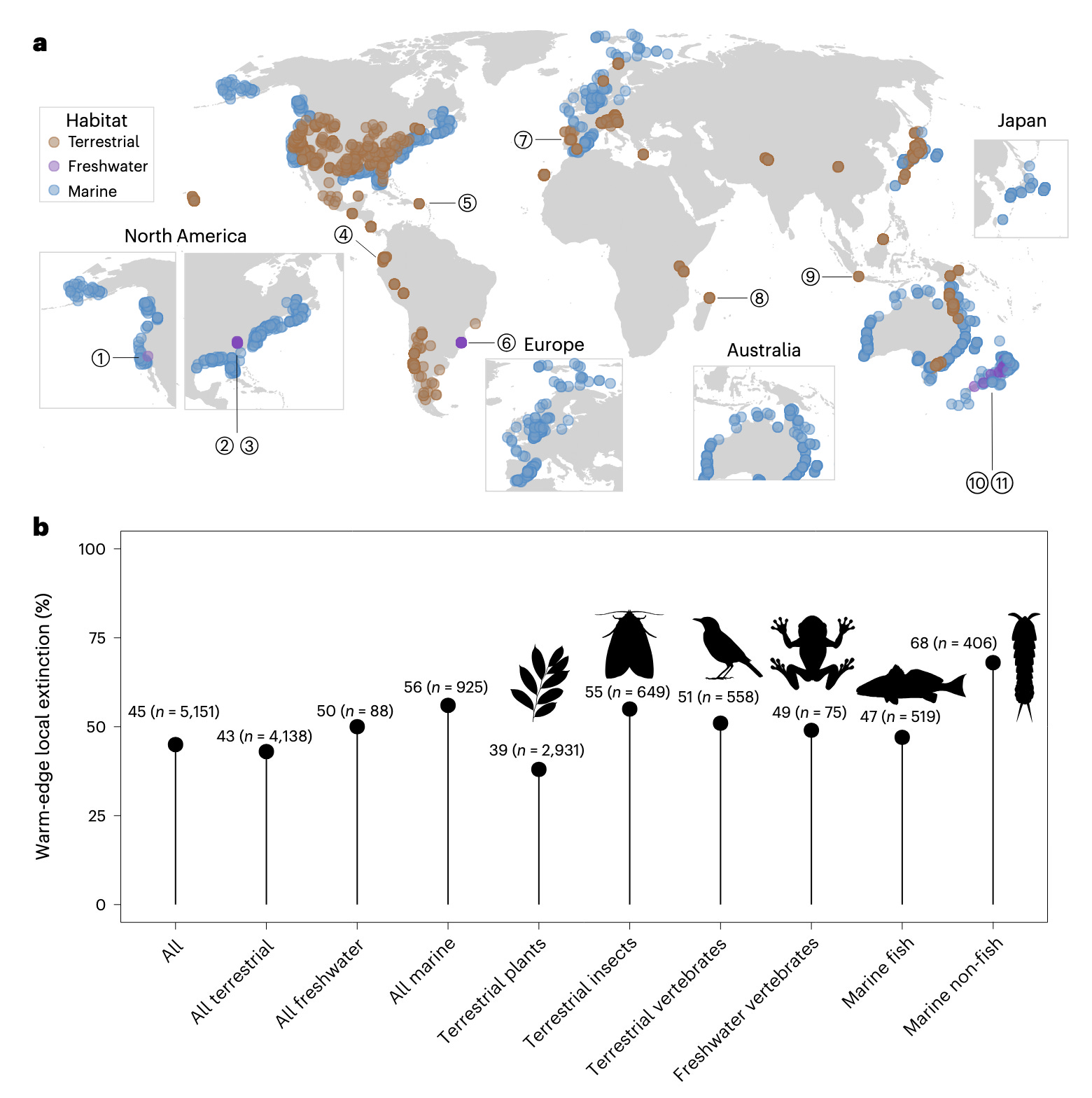
Murali and his collaborators spent a couple of years poring through dozens of studies, compiling information about more than 5,100 animal and plant species surveyed at tens of thousands of sites around the world, to determine if their ranges changed as a result of climate change.
They cast a wide net, scrutinizing data about a wide variety of life - including moths, beetles, birds, mammals, frogs, turtles, snakes, lizards, fish, and plants.
Their goal was to find studies that measured so-called “local extinctions” – areas within a species’ range from where it has disappeared – specifically caused by climate change, Murali said.
Isolating the cause was tricky. Biodiversity loss is complicated and has many causes that often interact with each other. In addition to climate change, threats like habitat loss, pollution from environmental toxins, pesticides, overharvesting, the pet trade, illegal logging, poaching, and invasive species all take their toll on local wildlife and plants across the world.
That made the selection of studies to include in the analysis crucial.
The research team decided to only include studies that spanned several years. That way they could track the survival of a species at a given site over time.
They used several other criteria to disqualify studies. To rule out habitat loss as the reason for a species’ disappearance, all surveys had to be in natural areas. They also excluded game animals or other potentially overexploited plants and wildlife.

Nearly half of species in temperate zones have disappeared from parts of their range
The results surprised them.
Biologists had long thought that tropical species were more vulnerable to climate change than those in temperate areas, such as North America and Europe.
“We actually found the opposite, that instead it’s not tropical species, but it was the temperate species,” that were affected more, Murali said.
The results held across the board - almost all groups faced higher local extinction rates in temperate regions than in the tropics.
Some of the hardest-hit groups in temperate zones were insects, marine species, and vertebrates – animals with a backbone like mammals, birds, and reptiles. More than half of those groups went locally extinct in temperate areas.
Although a third of all tropical species experienced local extinctions, different groups reacted differently. About half of marine fish and terrestrial vertebrates and insects disappeared from parts of their range in the tropics, compared to about one-fifth of plants and one-third of freshwater vertebrates.
Marine non-fish species were the hardest hit group, with 67% experiencing local extinctions in temperate areas compared to 60% in the tropics.
The world has changed
The research team was surprised by the results because one of the study authors’ own studies from 10 years ago had found that tropical species were more vulnerable to climate change.
“In that study, in 2016, about 39% of the species had local extinctions in the temperate zone. And then now it’s like 49%. So, basically, the temperate extinction increased,” John Wiens, a professor in the Department of Ecology and Evolutionary Biology at the University of Arizona and a co-author of the study, told me.
When asked why he thought the results were different now, he said, “I think just the world changed.”
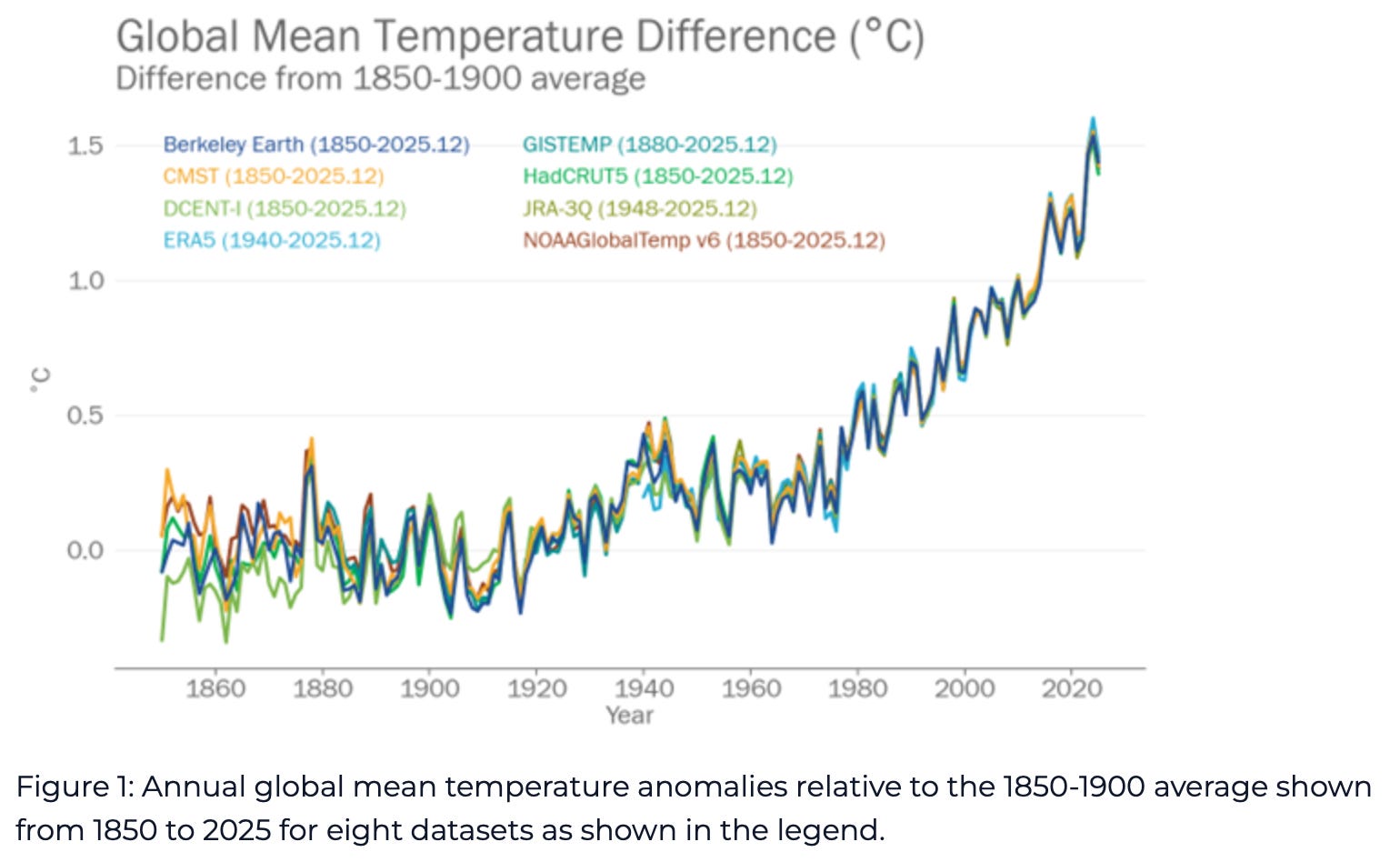
The world has gotten hotter. The years 2015-2025 were the 11 hottest years on record, according to the World Meteorological Organization, but the warming trend has been observed for many decades.
The new study also included about five times as many species, Wiens said, and it included more tropical plants, which appear to be comparatively resilient to climate change. Only 18% of tropical plants have experienced local extinctions because of it, compared to 45% of temperate plants.
Most temperate species are not moving north in response to climate change
The researchers noted that in tropical areas, species tended to disappear mostly in the warmest parts of their range – what biologists call the “warm-edge.”
That’s exactly what biologists had predicted. Basically, animals and plants would slowly migrate from warmer areas to regions farther from the equator, or, in mountainous areas, higher up, to seek cooler temperatures.
“The expectation then is that species will go extinct first at the warmest edge, because that’s already where they’re potentially heat-stressed,” Wiens said.
But to their surprise, they found that in temperate areas, climate change caused animals and plants to go locally extinct throughout their ranges, even in the cooler areas. And most did not move north to escape the heat.
“One of the big findings that we made was that they’re often not doing that. Seventy percent of the species are not expanding at their cool-range edges,” he said.
And that can have drastic repercussions for biodiversity.
“So, basically, the fight for [the species’] survival is going to depend mostly on whether or not these local populations go extinct or whether they survive,” he added.
What does it mean for conservation?
The findings have important implications for conservation.
Conservationists thought that by connecting natural areas, animals and plants would be able to naturally disperse to a more agreeable climate.
“But the truth is that we’re not seeing it. It’s not even a question of, are they moving fast enough? [They’re] not moving at all,” Wiens said. “These climate-related extinctions, at least in the temperate zone, could happen anywhere.”
And since the research had purposely focused on species relatively safe from other potential threats, other species could be in worse shape, Murali said, with additive effects from stressors such as habitat loss, invasive species, and others that impact their survival in addition to climate change.
What the future holds
But there is hope.
Earlier this year, scientists officially declared the most extreme climate change scenario, dubbed “RCP 8.5,” as “implausible” given current energy trends. That means it’s unlikely we’ll see the highest predicted global temperature increase of around 4.4 degrees Celsius (nearly 8 degrees Fahrenheit) above pre-industrial levels by 2100.
While the current study is cause for concern, there is evidence that conservation actions are paying off. For example, another of Wiens’ studies recently found that the rate of extinction over the past 500 years peaked around 100 years ago and has since slowed.
That means conservation actions can slow biodiversity loss, and studies like this can help isolate the causes and help direct resources to where they will be most effective in protecting species.
Still, every degree of warming matters, and protecting biodiversity over the long term will require not only direct conservation efforts but also climate action.
“I think we just need to be aggressive on all of these fronts. The pollution, the habitat destruction, everything,” Wiens said. “Because there’s all these things weighing down on these species and populations.”
But, he said, climate change “is particularly bad. Because you can protect [species] from all these other things, and climate change may still be coming for them.”
Know someone who might enjoy this post? I’d love for you to share it:
Related:


Nature Signals is a reader-supported publication. It takes many hours to write and research each post. To receive new posts in your inbox and support my work, consider becoming a free or paid subscriber.
Not ready to subscribe? Consider buying me a coffee (or a beer…).
Useful Resources and Links:
Murali, G., Karger, D.N. & Wiens, J.J. Temperate local extinctions from climate change are outpacing tropical extinctions. Nat. Clim. Chang. (2026).
Kristen E. Saban, John J. Wiens; Unpacking the extinction crisis: rates, patterns and causes of recent extinctions in plants and animals. Proc Biol Sci. (2025)
World Meteorological Organization: 2025 State of Climate Report.
Berkeley Earth: Global Temperature Report for 2025.
New York Times, 5/26/2026, by Brad Plumer and Eric Niiler: Why scientists retired the dire climate scenario used for over a decade.
NOAA’s Science on a Sphere program: Climate Model: Temperature Change (RCP 8.5) - 2006 - 2100.
European Commission: Five things you should know about climate scenarios.


